Showing posts with label Sanderling. Show all posts

Wednesday, 22 February 2017

Broome Roadtrip 02

I lodged at the Broome Bird Observatory for 3 days before and 3 days after the Ashmore Reef Pelagic Cruise. It sits on the edge of Roebuck Bay about 20km from Broome by road. It is a great place for birds!!

Silver Gull, Common Sandpiper
Brahminy Kite
Sanderling
Australian Bushlark
Brown Falcon catching some last rays.
White-bellied Sea-eagle
Whistling Kites
Yellow Chat, male
Roebuck Bay 
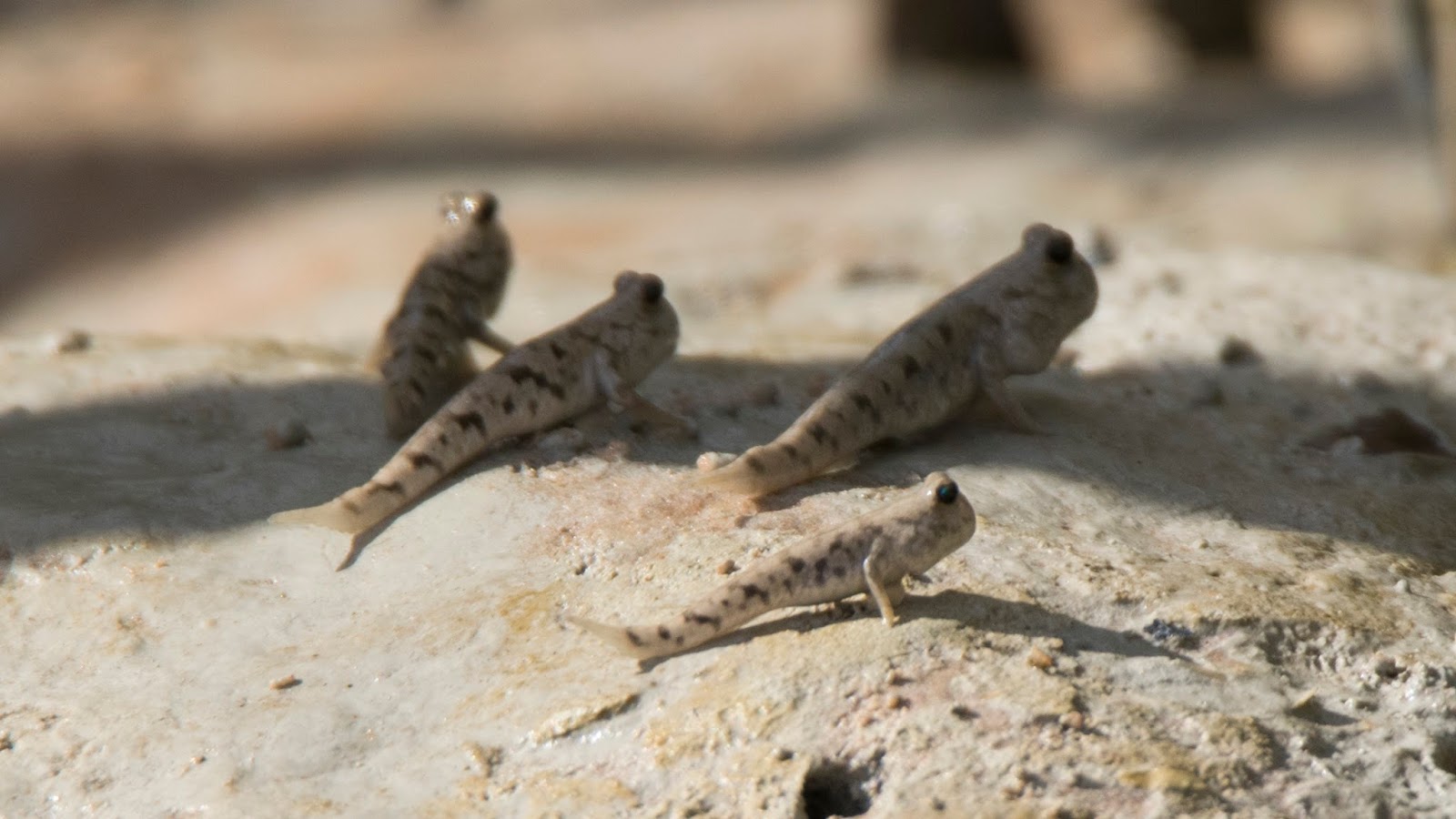
Mudskipper, species unknown to me.
Blue-spotted Mudskipper
Broad-billed Flycatcher
Great Egret
Mangrove Mudskippers
Oriental Pratincole
Pacific Golden Plover
High tide roost. Birds on the beach.
A close up of above. What can you see?
Curlew Sandpiper
Lesser Sand Plover
As to the shorebirds above? I reckon you can see Red-necked Avocets, Bar-tailed Godwits, Black-winged Stilts, Caspian Terns, a Common Sandpiper, Crested Terns, Eastern Curlews and Silver Gulls.

Sunday, 1 January 2017

Ashmore Reef 05 -- Middle Island and Horseshoe Cay

Middle Island and Horseshoe Cay

These were our destinations on third day at Ashmore Reef. This is the island where the terns usually live and breed. With 24,000 Sooty Terns and plenty of Bridled Terns on West Island, we wondered if there would be any left there!

The usual photogenic dawn.


As The Pig came into shore at Middle Island, Rohan Clarke yelled out, "Quick. Give me the binoculars". In the huge number of Sooty and Bridled Terns, Boobies and Lesser Frigatebirds spiralling in the updraft above the island, a "white tropicbird" was re-identified as a leucistic frigatebird, This was a mega find and many, many photos were taken. It was a star bird of the trip. We named him/her "Snowflake".

"Snowflake" Lesser Frigatebird Fregata ariel
Great Frigatebird, female Frigate minor
Lesser Frigatebird, male Fregata ariel
After the excitement of Snowflake and nesting frigate birds and boobies, we were off just a few hundred metres to Horseshoe Cay and it's plethora of shorebirds. Grey Plover, Pacific Golden Plover, Greater and Lesser Sand Plovers, Godwits, Turnstones, Stints, Sanderling, Tattlers, Terns, Greenshanks and one Terek Sandpiper.

 
One Terek Sandpiper Xenus cinereus amongst a scattering
of Sanderling Calidris alba with
a Grey-tailed Tattler Tringa breviceps,
a Lesser Sand Plover Charadrius mongolus and
the asiatic race of the Gull-billed Tern Gelochelidon nilotica affinis
One interesting resident was this crab. Can you tell me what it is? I don't know! Reminds me of SquareBob Spongepants.


Monday, 25 April 2016

Dutchman twitchy about twitching megas


Pronounced meguz i.e. the plural of mega. In The Netherlands Robert is a bit of a dedicated twitcher chasing rare vagrants [which the Dutch call megas] across the country at the drop of a hat. Remember The Netherlands is not that big so three or four hours will put you from one border to the other.

So after Merimbula we headed north without Heath who had taken the second car to visit mates in Sydney. We wouldn't see him for 4 or 5 days. We went to Cape Jervis to bird the Eastern Bristlebird - a mega although not a vagrant. Just hard to observe due to secretive nature and rarity. We set up our camp then, with not much daylight left went to check out the potential spot for the bird at Cape St George. Well, we hadn't gone 400 metres and had just turned south at a main intersection when we spotted the aforesaid bird on the verge. Instant stop and a great view of the bird with juvenile in tow for about 5 minutes but we were so close [5 metres] that I dared not move to get camera for photo as I had hopped out of the car [Robert had a great view from the passenger seat] and was looking over the bonnet. Hence no image but a mega and life tick x 2 birders.

Next day we moved on to Lake Wollumboola at Culburra Beach near Nowra to twitch the Hudsonian Godwit. Alas, we dipped but there were plenty of other birds there. Highlights were Bar-tailed and Black-tailed Godwits, Fairy and Little Terns, Lesser Sand Plover and Sanderling [2 x life ticks for me but common as Starlings to a European!].

Lesser Sand Plover


Robert in typical pose
White-winged Black Tern, non-breeding
Little Tern, breeding plumage. Black lores goes to bill. 
Little Tern, non-breeding
Rear: Fairy Tern, breeding plumage. Black loves does not extend to bill.
Red-necked Avocet


Sanderling