The Corymbia ficifolia trees along the main drag entering Loch Sport were if full flower last week. Flowers = nectar = nectar feeders = honeyeaters and lorikeets. The trees near the main store/post office were choc-a-block full of Musk Lorikeets and Rainbow Lorikeets, many more of the former. They are not so hard to photograph when their minds are full of food so I was able to get to within 5 or 6 metres of them, taking into consideration the main road between them and me! As it was only 8am, the sun was straight over my right shoulder so the lighting couldn't get much better.
Musk Lorikeet Glossopsitta concinna
Rainbow Lorikeet Trichoglossus moluccanus
As an aside, we have a ficifolia at home in Sale. It has the electricity wire above it and has had some severe pruning since planting a few years ago (yes, silly place to put it) but has never flowered. Until this year. There is one decent cluster of flowers on it, several single flowers totalling less than the cluster. Found by one Red Wattlebird!
Showing posts with label Musk Lorikeet. Show all posts
Friday, 12 January 2018
Wednesday, 10 January 2018
Wairewa _ Regent Honeyeater
The Regent Honeyeater Anthochaera phrygia is a critically endangered species. A Regent Honeyeater Recovery Program is in place. See here and a FB page here. The main aims are habitat regeneration and captive breeding and release. The bird is a nectar nomad favouring ironbark so will be irregularly seen although the environs of Chiltern in central Victoria are a relatively reliable place to see them.
Looking at both eBird and Birdata, the species has been seen in Gippsland before but not that recently. The last time was by Len and Jacquie Axen in their garden at Marlo in Feb 2015. Prior to that was by Steve Wright near Buchan in April 2013 and the most famous this century were a pair that bred at the Mitchell River Silt Jetties at Eaglepoint over Christmas 2009. The parents and a youngster were mist netted and banded.
Before Christmas, a small party of BLEGgers checked a report of a pair of Regent Honeyeaters at Wairewa about 7 kms east of Nowa Nowa. We were not expecting success as the report was not that recent but, as it turned out, the site is a pretty nice birding spot anyway so it would be a great day out if nothing else.
The place at Hall Road was swarming with Musk Lorikeets and other honeyeaters species. Box trees were heavily in flower as was the Manuka. Muskies were observed at head height hanging in manuka unconcerned with photographers just two metres away. Yellow-tufted, Little and Red Wattlebirds, Eastern Spinebills, New Hollands and White-naped were all over the place.
Dusky Woodswallow Artamus cyanopterus
Jacky Winter Microeca fascinans
Musk Lorikeet Glossopsitta concinna
Our party of four quietly and slowly walked the fence line track playing the call on occasion but no dice. We made our way back along the fence. And then ..... A bird in a tree, right against the bright sky ... yes ... a Regent Honeyeater. Probably a juvenile!! Breeding has occurred!!! High excitement. The whirr of motor drives. Change the exposure to over expose by two, no three stops. More images. YES. Just how exciting is this. Pant pant.
We adjourned back to the cars and a cuppa to assess the situation. Dean Ingwersen, the Regent Honeyeater Recovery Program man, was rung immediately. The images were excellent silhouettes. Computer work at home showed that the juvenile was in fact an adult.
We then went back for a more detailed search in an area within 100 metres of our sighting where Roger had heard some calls that could be our target. We went into the bush a short way, set up a songster, then played the call one more time. Within 10 seconds a pair of Regent Honeyeaters coming winging in to see who we were. More photos then we called it quits for the day. Mission accomplished.
Regent Honeyeater Anthochaera phrygia
Those three images were mine. Ken Russell took these last two which were the best. Nikon beats Canon.
Looking at both eBird and Birdata, the species has been seen in Gippsland before but not that recently. The last time was by Len and Jacquie Axen in their garden at Marlo in Feb 2015. Prior to that was by Steve Wright near Buchan in April 2013 and the most famous this century were a pair that bred at the Mitchell River Silt Jetties at Eaglepoint over Christmas 2009. The parents and a youngster were mist netted and banded.
Before Christmas, a small party of BLEGgers checked a report of a pair of Regent Honeyeaters at Wairewa about 7 kms east of Nowa Nowa. We were not expecting success as the report was not that recent but, as it turned out, the site is a pretty nice birding spot anyway so it would be a great day out if nothing else.
The place at Hall Road was swarming with Musk Lorikeets and other honeyeaters species. Box trees were heavily in flower as was the Manuka. Muskies were observed at head height hanging in manuka unconcerned with photographers just two metres away. Yellow-tufted, Little and Red Wattlebirds, Eastern Spinebills, New Hollands and White-naped were all over the place.
Dusky Woodswallow Artamus cyanopterus
Jacky Winter Microeca fascinans
Musk Lorikeet Glossopsitta concinna
Our party of four quietly and slowly walked the fence line track playing the call on occasion but no dice. We made our way back along the fence. And then ..... A bird in a tree, right against the bright sky ... yes ... a Regent Honeyeater. Probably a juvenile!! Breeding has occurred!!! High excitement. The whirr of motor drives. Change the exposure to over expose by two, no three stops. More images. YES. Just how exciting is this. Pant pant.
We adjourned back to the cars and a cuppa to assess the situation. Dean Ingwersen, the Regent Honeyeater Recovery Program man, was rung immediately. The images were excellent silhouettes. Computer work at home showed that the juvenile was in fact an adult.
We then went back for a more detailed search in an area within 100 metres of our sighting where Roger had heard some calls that could be our target. We went into the bush a short way, set up a songster, then played the call one more time. Within 10 seconds a pair of Regent Honeyeaters coming winging in to see who we were. More photos then we called it quits for the day. Mission accomplished.
Regent Honeyeater Anthochaera phrygia
Those three images were mine. Ken Russell took these last two which were the best. Nikon beats Canon.
Thursday, 28 September 2017
Mallee Birding with Ethan_01
Last weekend Ethan, my grandson, Andrew, from UK via Warsaw, and I went on a 4D/3N Firetail Birding Tour tour to the Mallee with guide Simon Starr. Ethan was keen to see all of the 23 parrot species we could possibly see, Andrew had a big shopping list and I was along to keep the job in order. We had a fantastic time. Andrew got 40 or so life ticks and Ethan ticked about 60! I got 2 and Simon got nil!
After picking Andrew up at Tullamarine at 7am straight off his Warsaw to Melbourne flight, we headed to the southern section of Wyperfeld NP via ...
1. Castlemaine Botanic Gardens where Powerful Owl was almost the first official bird of the trip. It was spotted by Ethan within 30 seconds and he had never seen an owl before! This instantly elevated him to the position of "Chief Spotter" which he fulfilled admirably over the trip with some difficult birds. I was still starting an eBird list so I was assigned the position of Administrator to keep a tab on the birds we saw.
2. Mia Mia Track in the Muckleford State Forest where we heard and saw the first of many Pallid Cuckoos plus Horsfield's Bronze-cuckoo, saw a Weebill nest in action, closeups of Buff-rumped Thornbills, seven species of Honeyeater [Ye-f, Ye-t, ReW, Fus, Wh-n, Br-h and Bl-ch*] and Grey Currawong.
3. Wedderburn where we viewed Musk Lorikeets, and
4. Hopetoun which appeared to have no residents at all on a Thursday afternoon. It was surmised an alien invasion had occurred.
Along the way we saw several Spotted Harriers and between Hopetoun and Yapeet, Ethan spotted one on a fence post by the road. Wyperfeld was excellent with Emu, one Major Mitchell Cockatoo, four more Honeyeaters [W-f C, Ta-c, Sp-c, Wh-e**]. The other three also saw a Shy Heathwren. On the way out at dusk we saw Spotted Nightjar and a Tawny Frogmouth.
We stayed overnight was in the motel units behind the Hopetoun Hotel. Andrew stayed vibrant until the end of the meal then crashed. It was a sterling effort to avoid jetlag. We ticked 88 species for the day. The trip was a bird WATCHING trip, not one for hunting down birds for photos so not that many photos were taken. Ethan is a bit of a keen bird photographer too so he had a spare 70-300 lens on his Canon 1100D. Here are some of our efforts.
Buff-rumped Thornbill Acanthiza reguloides
Long-billed Corella Cacatua tenuirostris
Musk Lorikeet Glossopsitta concinna
Powerful Owl Ninox strenua
Spotted Harrier Circus assimilis
Tawny Grogmouth Podargus strigoides This is a headlight shot. He has something in his mouth. A mouse?
* Yellow-faced, Yellow-tufted, Red Wattlebird, Fuscous, White-naped, Brown-headed, Black-chinned
** White-faced Chat, Tawny-crowned, Spiny-cheeked, White-eared
After picking Andrew up at Tullamarine at 7am straight off his Warsaw to Melbourne flight, we headed to the southern section of Wyperfeld NP via ...
1. Castlemaine Botanic Gardens where Powerful Owl was almost the first official bird of the trip. It was spotted by Ethan within 30 seconds and he had never seen an owl before! This instantly elevated him to the position of "Chief Spotter" which he fulfilled admirably over the trip with some difficult birds. I was still starting an eBird list so I was assigned the position of Administrator to keep a tab on the birds we saw.
2. Mia Mia Track in the Muckleford State Forest where we heard and saw the first of many Pallid Cuckoos plus Horsfield's Bronze-cuckoo, saw a Weebill nest in action, closeups of Buff-rumped Thornbills, seven species of Honeyeater [Ye-f, Ye-t, ReW, Fus, Wh-n, Br-h and Bl-ch*] and Grey Currawong.
3. Wedderburn where we viewed Musk Lorikeets, and
4. Hopetoun which appeared to have no residents at all on a Thursday afternoon. It was surmised an alien invasion had occurred.
Along the way we saw several Spotted Harriers and between Hopetoun and Yapeet, Ethan spotted one on a fence post by the road. Wyperfeld was excellent with Emu, one Major Mitchell Cockatoo, four more Honeyeaters [W-f C, Ta-c, Sp-c, Wh-e**]. The other three also saw a Shy Heathwren. On the way out at dusk we saw Spotted Nightjar and a Tawny Frogmouth.
We stayed overnight was in the motel units behind the Hopetoun Hotel. Andrew stayed vibrant until the end of the meal then crashed. It was a sterling effort to avoid jetlag. We ticked 88 species for the day. The trip was a bird WATCHING trip, not one for hunting down birds for photos so not that many photos were taken. Ethan is a bit of a keen bird photographer too so he had a spare 70-300 lens on his Canon 1100D. Here are some of our efforts.
Buff-rumped Thornbill Acanthiza reguloides
Long-billed Corella Cacatua tenuirostris
Musk Lorikeet Glossopsitta concinna
Powerful Owl Ninox strenua
Spotted Harrier Circus assimilis
Tawny Grogmouth Podargus strigoides This is a headlight shot. He has something in his mouth. A mouse?
* Yellow-faced, Yellow-tufted, Red Wattlebird, Fuscous, White-naped, Brown-headed, Black-chinned
** White-faced Chat, Tawny-crowned, Spiny-cheeked, White-eared
Tuesday, 17 May 2016
Swiftly getting nowhere
This last weekend [May 14/15] was designated by Birdlife Australia for Swift Parrot and Regent Honeyeater surveys. We checked out suitable environments at Heyfield, Holey Plains and Jack Smith Lake [well, perhaps not JSL but the birding was excellent]. Five of us failed to see either species but these Musk Lorikeets were occupying ideal Swiftie habitat.
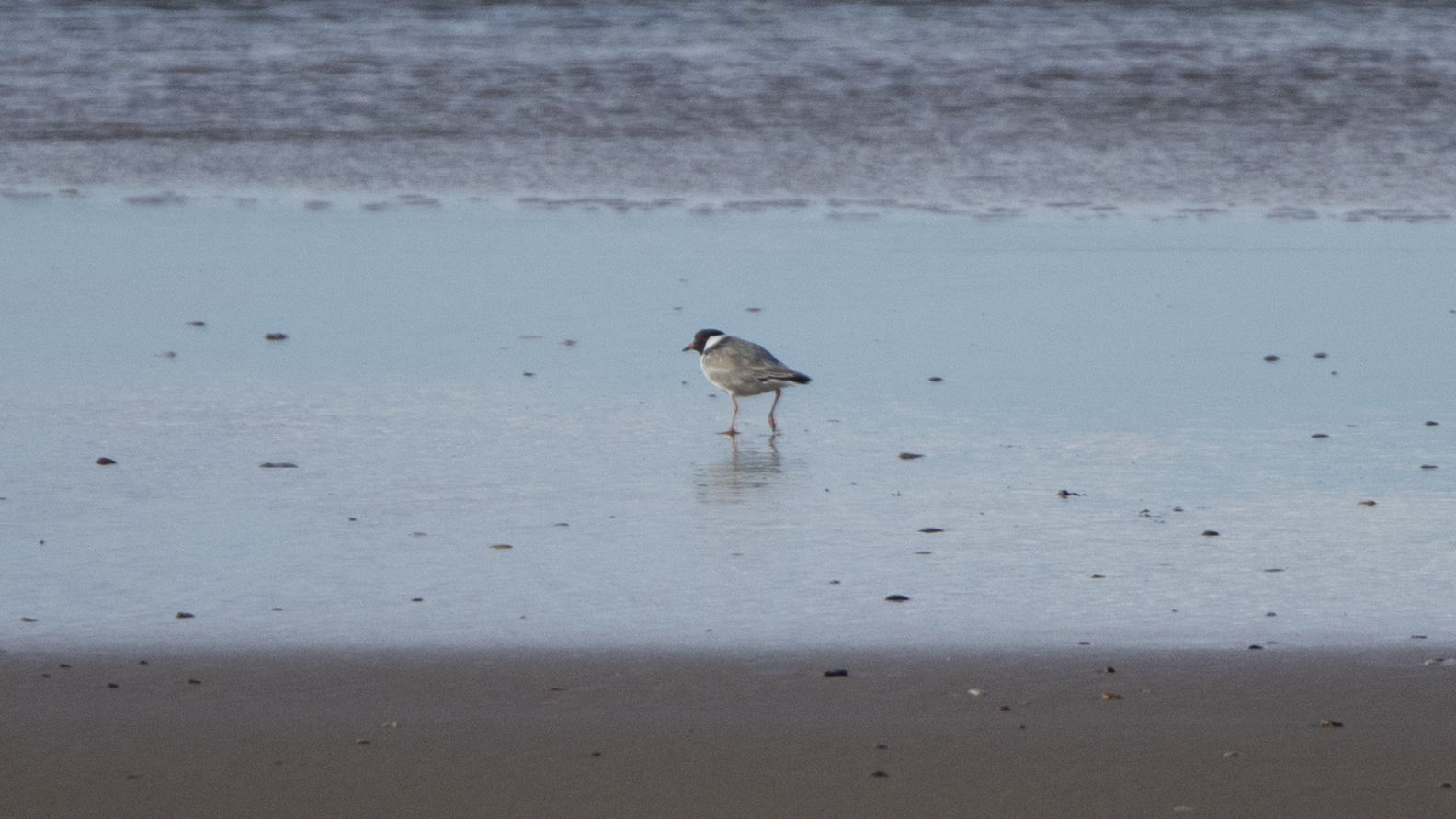
These Red-necked Avocets and one Banded Stilt were occupying their own suitable environment as was this single Hooded Plover, all by itself on the shore of the 90-Mile Beach.
Sunday, 28 February 2016
Wandering Dutchman meets Cape Gannet
Parks Victoria do an "Open Day" into the gannet colony at Point Danger once a year for anyone to go but especially for the Portland locals to see the only gannet colony on mainland Australia. Just a few kilometres to the south is the Lawrence Rocks Conservation Reserve where many thousands of Australian Gannets call home. About 4-500 gannets live on the mainland on the top of the cliff overlooking Bass Strait and Lawrence Rocks.
A small crowd of about 25 gathered at the end of the road by the fence. This is the first line of defence for the colony.
We walked about 100 metres to the very edge of the colony separated from us by an electrified fence whose main aim is to deter foxes. You could almost touch them.
Melissa gave us an excellent talk about the gannets. She is highly experienced with them and has spent time with Cape Gannet colonies in South Africa. Over there they have just a few Australasian Gannets in the colonies and over here we have, in the mainland population, just one breeding pair of Cape Gannets. They have a well grown chick which may be big enough to fledge. I recall it takes 100 days before fledging. Last year's Cape chick failed to fledge. Whilst we were there, a single adult Cape raucously landed [their calls are different] thus there are at least 3 Cape Gannets in this population of Australian Gannets.
These birds are just beautiful with lovely clean lines of black and white plus the grey beaks and "buff-washed head" Pizzey & Knight.
The differences between the two species are obvious but hard to spot when there are hundreds of heads moving every which way or resting tucked in or preening. The Australian Gannet has a dark iris. The iris of the Cape Gannet is much lighter, almost the colour of the orbital ring of pale china-blue.
The other difference is the length of the black gular [throat] stripe. The Aussie has a short stripe and the Cape has a strip extending a fair way down the ventral surface of the neck.
Whichever species you are looking at, these birds are just superb flyers. Once they have fledged they spend the first five years of their life flying around the lower southern latitudes of the earth before ending up back at their birthplace - mostly. I guess the occasional one becomes disoriented and finishes in the wrong spot. Hence our Capes are here and not in South Africa.
Earlier in the day Robert and I went for a walk before breakfast down to the Portland pier. This Masked Lapwing must think he is the missing Jonathan Livingstone Seagull.
At the gannet-fest, we heard that a Nankeen Kestrel has a favourite perch in the town itself overlooking the bay.
| The mainland gannet colony with Lawrence Rocks in the distance |
We walked about 100 metres to the very edge of the colony separated from us by an electrified fence whose main aim is to deter foxes. You could almost touch them.
Melissa gave us an excellent talk about the gannets. She is highly experienced with them and has spent time with Cape Gannet colonies in South Africa. Over there they have just a few Australasian Gannets in the colonies and over here we have, in the mainland population, just one breeding pair of Cape Gannets. They have a well grown chick which may be big enough to fledge. I recall it takes 100 days before fledging. Last year's Cape chick failed to fledge. Whilst we were there, a single adult Cape raucously landed [their calls are different] thus there are at least 3 Cape Gannets in this population of Australian Gannets.
These birds are just beautiful with lovely clean lines of black and white plus the grey beaks and "buff-washed head" Pizzey & Knight.
The differences between the two species are obvious but hard to spot when there are hundreds of heads moving every which way or resting tucked in or preening. The Australian Gannet has a dark iris. The iris of the Cape Gannet is much lighter, almost the colour of the orbital ring of pale china-blue.
![]() |
| The bird at the back left is the Cape with the pale china-blue eye whilst the other two have the dark iris. |
![]() |
| The bird sitting to the right is the Cape Gannet. |
![]() |
| Australasian Gannet |
![]() |
| Cape Gannet |
![]() |
| Cape Gannet |
Earlier in the day Robert and I went for a walk before breakfast down to the Portland pier. This Masked Lapwing must think he is the missing Jonathan Livingstone Seagull.
Two koalas were spotted plus a Yellow-tailed Black-cockatoo with breakfast and a small flock of Musk Lorikeets amongst the plethora of Rainbow Lorikeets.
At the gannet-fest, we heard that a Nankeen Kestrel has a favourite perch in the town itself overlooking the bay.
Tuesday, 12 January 2016
Bird Nerd visits Queensland 02
On the second night of travelling, I ended up at the lookout on the top of the Moonbi Hills a few kilometres north of Tamworth on the New England Highway. I just put up my tent in a grassy corner of the carpark.
Apart from the occasional low level background noise of a semi either crawling up the hill or using engine brakes to descend, it was quiet and the view to the west was pretty speccy. I awoke early [5?] and was making a cuppa when the unmistakable screaming cackling [click here] of the Channel-billed Cuckoo snapped my head upwards. Three of them circled around the lookout for several minutes then landed in very viewable trees. Their calls accompanied the Pacific Koels in the trees by my camp [just to remind me of the one I had left behind in Sale].
![]() |
| Channel-billed Cuckoo Scythrops novaehollandiae |
Other birds in the car park were Rainbow Lorikeets [lots], Musk Lorikeets [less], Superb Fairy-wrens and Noisy Friarbird. No picture of a Koel.
![]() |
| Musk Lorikeet Glossopsitta pusilla |
![]() |
| Superb Fairy-wren Malurus cyaneus |
Same fairy-wren but in different light. Shadow versus a setting sun. More later.
Subscribe to:
Posts (Atom)